
By the mid-twentieth century, Cairo’s rapid urban expansion gave rise to a distinctive pentagonal paving pattern now known internationally as “Cairo tiling.” Long familiar to Cairenes as part of the city’s everyday landscape, it achieved global mathematical fame for its unusual geometric properties, even as its local origins remained largely overlooked.
A little‑known feature of modern Egyptian heritage is the so‑called “Cairo tiling” (also called the “Cairo Pentagon”), a street paving of pentagons found throughout Cairo and its environs. It appears in two formats: individual pentagons and pentagons set within a square unit and in two slightly different sizes. Cairenes encounter it daily—often without a second thought—yet it has received little recognition beyond the city. Yasmine El Dorghamy, editor of Rawi, recalls playing hopscotch on the tiles as a girl at her grandmother’s house in Heliopolis. That kind of subconscious recognition is likely shared by many Cairenes, for whom the tiling often evokes long‑forgotten moments. By contrast, in mathematical circles it is remarkably well known. The paving entered the mathematical literature after James Dunn drew attention to it in 1971 after a visit to Cairo. Martin Gardner soon popularised it in a 1975 Scientific American article on tilings, and Robert H. Macmillan wrote about it again in 1979 after encountering the paving during a visit. Gardner’s influence in particular sparked a proliferation of mathematical expositions and popular write‑ups.
However, it was never shown in its most obvious form: a photograph. Instead, every account reproduced it only as a line drawing. This absence became a curiosity in its own right and prompted me to look for an actual image. I put out a plea on the website for an in‑situ photograph of the Cairo tiling and, in parallel, contacted mathematicians who seemed likely to know of one. Nobody could find anything. The situation remained unchanged until I came into contact with Helen Donnelly, as detailed below.
Admiration and Influence
Mathematicians and artists have long admired the Cairo tiling, often in strikingly appreciative terms: “This beautiful tessellation” (Martin Gardner); “special aesthetic appeal” (Doris Schattschneider); and “the tessellation is particularly pleasing to the eye” (Robert Macmillan). Few tilings attract such consistent praise. Mathematicians such as Frank Morgan and Robert Fathauer—advocates of the tiling—have even made pilgrimages to see it in situ. Artist Helen Donnelly, who had not known of the paving before visiting Cairo, was so taken with it that she began researching it on the spot. In doing so, she found my website’s request for a photograph and kindly supplied one—an unexpected contribution that proved pivotal. M. C. Escher, the famed Dutch tessellation artist, also incorporated the tiling into his work, predating the tiling’s association with Cairo.
On the face of it, it is only a paving—one among many found worldwide. What, then, accounts for this widespread interest and admiration among such a diverse group? The answer, which I explore below, lies in a combination of aesthetic and geometric qualities that set the Cairo tiling apart.
Early History and Rediscovery
Although mathematicians quickly recognised the paving’s geometric properties, they said little about its origins; early investigators understandably focused on geometry. That omission persisted: mathematical accounts relied on line drawings rather than photographs of the paving itself. Based in the United Kingdom and with an interest dating to 1986, I have been investigating the tiling’s history intensively since 2010, with generous assistance from people connected to Cairo. Much has now come to light, advancing the story far beyond previous understanding, though some gaps remain.
What can be stated with confidence is that the paving was introduced in 1957 by the Nile Company, based on a design by architect Ramzy Omar. A single surviving advertisement from the company archives provides the crucial evidence. The advertisement records the year—1957—and identifies Ramzy as the designer. It also notes that the paving was registered as a patent, described as a new product, and intended for use around swimming pools, gardens, and petrol stations.
It should be noted that the design did not originate with Ramzy, although it is likely he was unaware of earlier examples. Predecessors of what is now called the Cairo tiling may reach back to a proposed seventeenth‑century Mughal jali, a drawing by the famed Japanese artist Katsushika Hokusai (1824), and a US patent by Herbert C. Moore (1909). Visiting mathematicians James Dunn and Robert H. Macmillan—each encountering the paving in Cairo without prior knowledge—later described it in mathematical articles (1971 and 1978), which helped cement its association with the city and its subsequent fame. To Ramzy, therefore, goes the glory for its modern inception.
Ramzy Omar
Ramzy Omar (1916–2014) was a well-known architect and interacted with President Nasser and President Sadat. From childhood he showed exceptional artistic talent, developing a distinctive drawing style that his professors recognised instantly. During his military career he became known for delivering high‑pressure architectural projects that others refused. He had 22 major projects to his name, including the Ministry of Foreign Affairs on the Nile Corniche and the Sheraton Hotel. He is also credited with designing the Egyptian flag at President Nasser’s request. However, background details about his work on the Cairo tiling remain scarce; nothing further has been found in the family archives.
Spread Across Egypt
The paving soon became popular across Cairo and, indeed, much of Egypt, though the precise mechanisms of its spread remain unclear. It was likely advertised in trade journals or newspapers, but no such material has yet been located. Historical photographs from the Nasser and Sadat archives show examples across the country—Galaa Club (1957), Cairo Tower (1961), Helwan (1961), Alexandria (1964), Al-'Ain al-Sokhna (1967), and the Indian Embassy (1967). Given the passage of time, it is unlikely that many of these early installations survive. Even so, amid Cairo’s shifting urban landscape, one example from the original period survives at the home of mathematician Michel Hébert in Garden City. Although no documentation survives, the building’s overseer believes the paving dates to 1957; however, I remain cautious about relying on such a distant memory. Curiously, the interior design here differs subtly from other single‑pentagon examples—the only such variation known—which supports its identification as an early installation or possible prototype.
Noteworthy Installations – Past and Present
Noteworthy past examples once appeared in several locations on the downtown campus of the American University in Cairo, where the paving was installed in the late 1960s. Today, only a small remnant survives on the former Greek Campus. Another prominent example once adorned the terraces of the Old Cataract Hotel in Aswan—one of the world’s celebrated historic hotels—but it was removed during renovations in 2011. The installation at the Gezira Sporting Club (see banner photograph) still exists and is notable for its large extent, though the date of its introduction there remains unknown. More broadly, the paving has long been a familiar sight in the districts of Maadi and Dokki.
Colours and Formats
Because the pavings occur in two formats—square units and single pentagons—and in a range of colours, a variety of colouring arrangements naturally arises. In practice, single pentagons allow far more variation than the square format. Some degree of structure is usually preferable to a disjoint or arbitrary scheme, yet it remains unclear whether installers were given guidance or left to their own devices. Without documentation, it is not obvious how a typical purchaser without a mathematical background would have known how to achieve an aesthetically pleasing arrangement.
For the square format, the most common schemes are plain (mono-coloured) tiles, chequerboard, and stripes. Single pentagons, by contrast, show a wider range: four‑colour arrangements in several configurations, occasional five‑colour schemes, and the familiar back‑to‑back pairings.
Curiously, a three‑colouring—the minimal map‑colouring solution—has not been observed. Further discussion of colouring as an abstract mathematical problem appears in the mathematics section below.
A Unique Indoor Instance
Aside from the street examples, there is also a curious and unique indoor instance of the tiling at the entrance to the Women and Memory Forum in Mohandiseen. Notably, the tiles use exactly the same geometry as the pentagons in the street paving, including the characteristic collinearity feature, which suggests a connection—albeit a likely coincidental one. They are, however, much smaller, measuring only about 3–4 inches per side, and the colouring differs as well.
Mathematical Aspects
This section examines the mathematics of the tiling: how it is constructed, how its angles are determined, and which geometric properties it exhibits. Topics include the grouping of four pentagons into a parhexagon, resulting lines of collinearity, colouring arrangements that follow from these structures, and finally generalised forms and commonly misattributed examples.
Geometric Construction
The pentagon is very easy to construct—essentially child’s play, despite its seemingly complex appearance with four orientations and differing side lengths. All that is required is a 3×3 grid on squared paper. Draw the crosses at the grid intersections, reflect them (left), and then join the appropriate points to form the pentagon (centre). The final outline can then be shown without the construction marks (right). No calculation is needed. This construction yields a pentagon with angles approximately 108.43° (×2), 90° (×2), and 143.13° (×1).
Properties and Features
The tiling has several interesting properties and features that most tilings lack, the most prominent being the appearance of parhexagons and long lines of collinearity.
(i) Parhexagon
A parhexagon is a hexagon whose opposite sides are parallel and equal in length. This underlying structure is one of the deeper geometric reasons the Cairo tiling appears so ordered despite being made from irregular pentagons. The parhexagon supplies a hidden regularity that underpins the tiling’s visual order. When pentagons are grouped into sets of four, they form these parallel‑sided hexagons. The tiling then repeats in both horizontal and vertical directions. When these groupings are overlapped at right angles, they produce a striking and unexpected visual effect—one rarely encountered in other tilings.
(ii) Collinearity
Collinearity occurs when three or more points lie on a single straight line. In the Cairo tiling, lines of collinearity run through the long diagonals of the parhexagon, passing through the midpoint of a pentagon’s base and extending into adjacent tiles. These long, uninterrupted alignments contribute to the tiling’s distinctive aesthetics and are often perceived subconsciously by viewers.
Colouring Arrangements
Another aspect of interest is how the tiling can be coloured. A frequent question for any tiling is: how many colours are needed, and how might they be arranged? Many possibilities exist. One structured approach is what mathematicians call map colouring, a term derived from cartography, in which colours are assigned to countries or counties so that adjacent areas have distinct colours and are easy to differentiate. However, this is by no means a requirement, as non‑map colourings can also be highly structured. For a map colouring of the Cairo tiling, the minimum is three colours (two are impossible, as three tiles meet at a vertex). Four, five, or more colours are also possible, though beyond four the overall structure becomes harder to perceive. A typical structured non‑map colouring assigns a single colour to each pair of pentagons that meet along their bases. This base‑to‑base pairing is then repeated throughout the pattern, alternating with a second colour.
Generalised Forms and Misattributed Examples (Cairo-like)
The defining conditions can be relaxed to some extent, with what I describe as “Cairo-like” to differentiate it from the in situ model. The pentagon’s base may be either shorter or longer than the sides and still produce a Cairo‑like tile. More formally, the defining requirement is that the pentagon has two non‑adjacent right angles, each adjoining two equal sides. There is also a single exceptional form in which five sides share the same length.
Two notable examples with particularly appealing properties are the dual of the 3.3.4.3.4 tiling and the equilateral pentagon. The 3.3.4.3.4 tiling, of squares and equilateral triangles, is one of the eight semi‑regular (or Archimedean) tilings: edge‑to‑edge tilings made from regular polygons in which every vertex arrangement is identical. Joining the midpoints, one obtains their dual, a type known as a Laves tiling. An equilateral pentagon is simply a pentagon whose five sides are equal in length, though its angles need not be. By contrast, a regular pentagon—which does not tile—has both equal sides and equal angles. These tiles are sometimes cited as examples of the Cairo pentagon, but that identification is incorrect: side‑by‑side comparison reveals clear differences, especially in relative base lengths and the absence of the characteristic collinearity seen in in‑situ Cairo paving.
In general, an arbitrary pentagon will not tile the plane. Only certain special forms do, and these belong to a finite set of distinct types. The Cairo pentagon belongs to Type 4 in the classification of the fifteen convex pentagons known to tile—a list whose completeness was finally proved in 2017 by Michaël Rao, a French computer scientist.
Remaining Gaps and Preservation Concerns
Although much of the story has now been uncovered, it is still not quite complete. The patent has not yet been found; it would almost certainly provide further valuable detail. The date of introduction for the square format is also unknown. Because it does not appear in early photographs, it was likely a later development, though exactly when remains unclear. The earliest known image is from 1970. There are likely additional documents, but none have yet come to light; inquiries with the Nile Company revealed only the single surviving advertisement.
I hope this article may encourage others to help complete the story, or to add to what is already known, or even to offer informed speculation. It may also prompt efforts to preserve surviving examples of the paving. My collaborators report frequent instances of the tiling being removed—often for the sake of change—and replaced with plain concrete or uniform square slabs. A recent example is the downtown AUC installation: only a small portion of the Greek Campus section now survives. I would be grateful to receive details that advance the study. In particular, any promotional material that accompanied the paving’s sale or advertising would be valuable.
Further Resources
Further information is available on the author's website, including additional photographs from the Nasser and Sadat archives, historical images, a full biography of Ramzy Omar, and acknowledgements of the many collaborators in Cairo who contributed to this work.
https://www.magnificent-tessellation.com/cairo-tiling
Author's Note:
As mentioned above, I have pursued this research from the United Kingdom. Many people connected with Cairo—as visitors, residents, or scholars—have assisted and contributed materially to these inquiries; without their help, this story could not have been told. They include, in order of appearance: Helen Donnelly, Gregg De Young, Tarek Fikry, Yasmine El Dorghamy, and Michel Hébert. My thanks to Gregg De Young and Robert Fathauer for their generous comments on the manuscript.
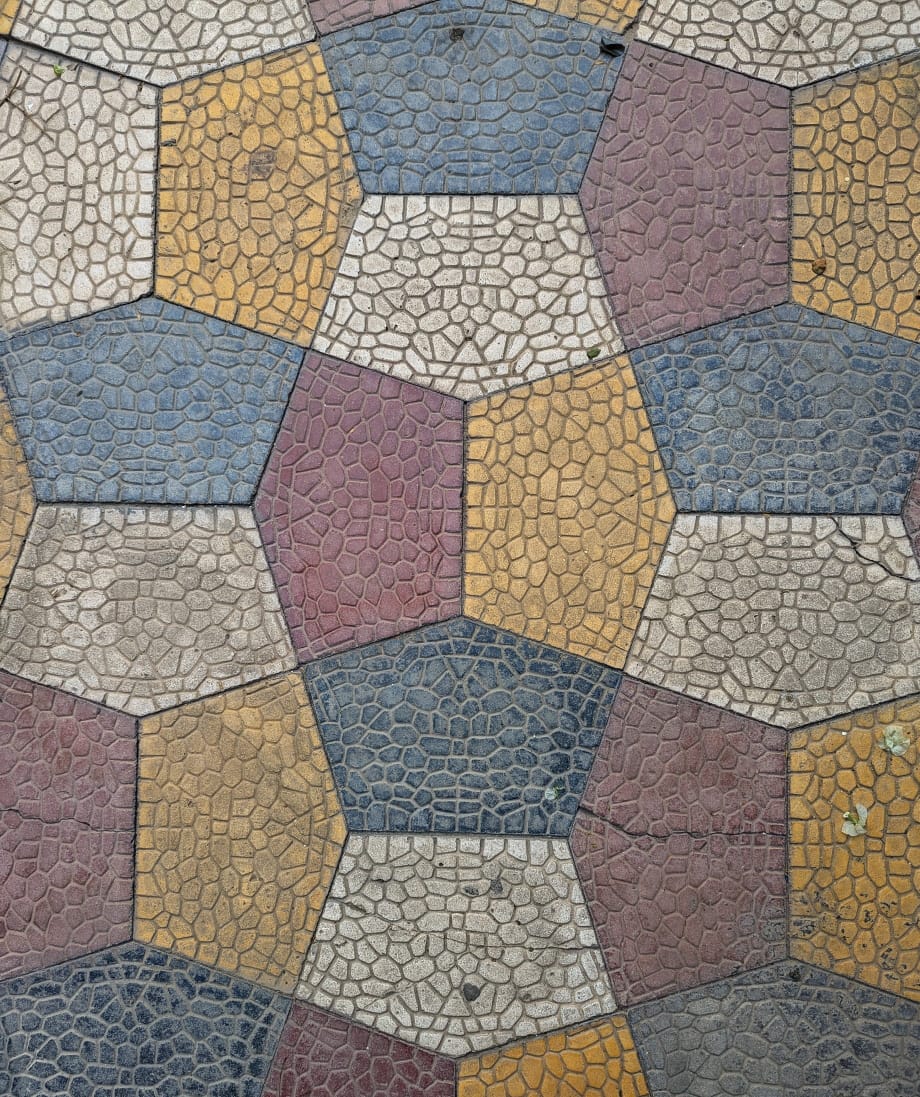
The first of the two formats: individual pentagons. © Yasmine El Dorghamy
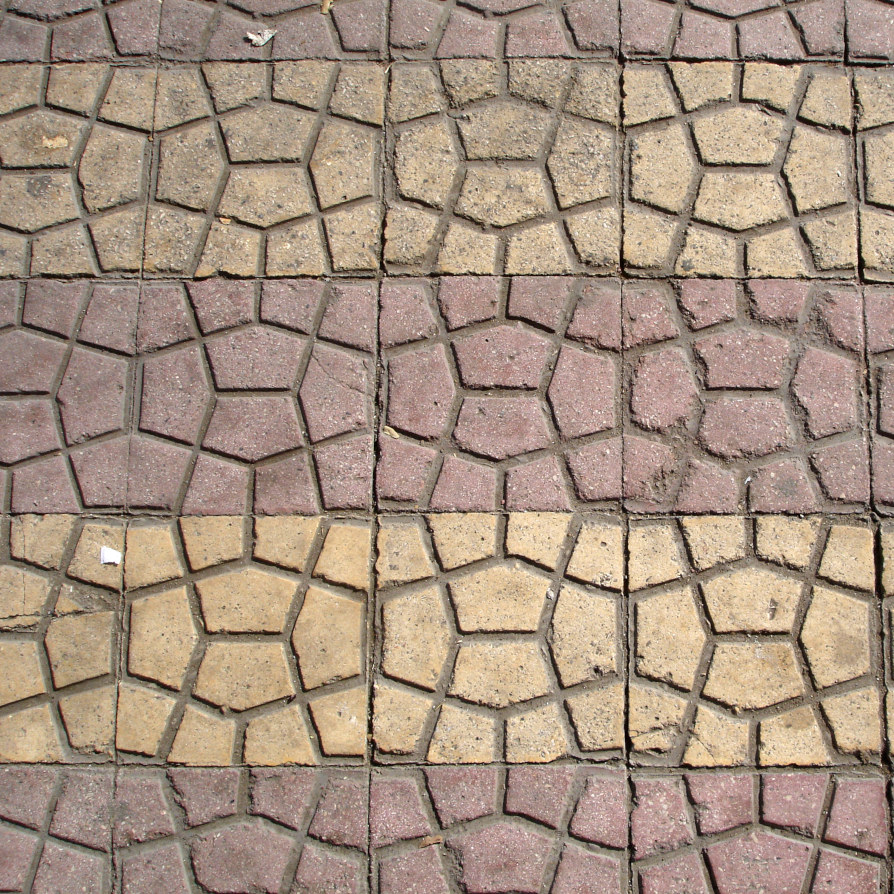
The second of the two formats: pentagons set within a square unit. © Helen Donnelly
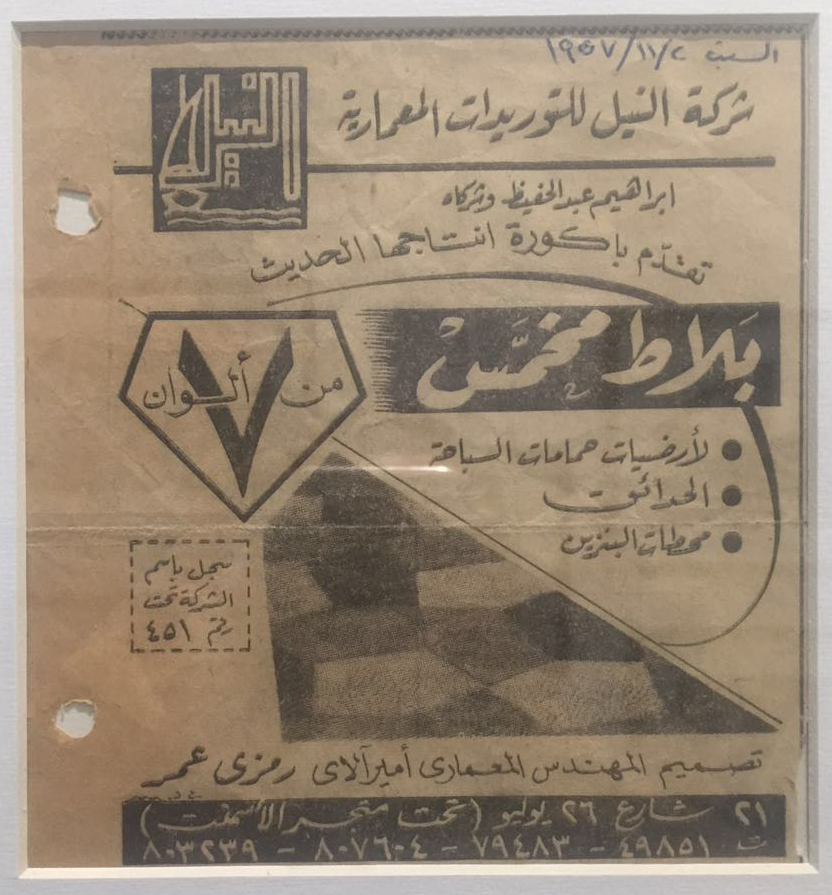
Nile Company advert, 1957 (publication unclear). © Nadia Abel Hafiz, Nile Company Archive
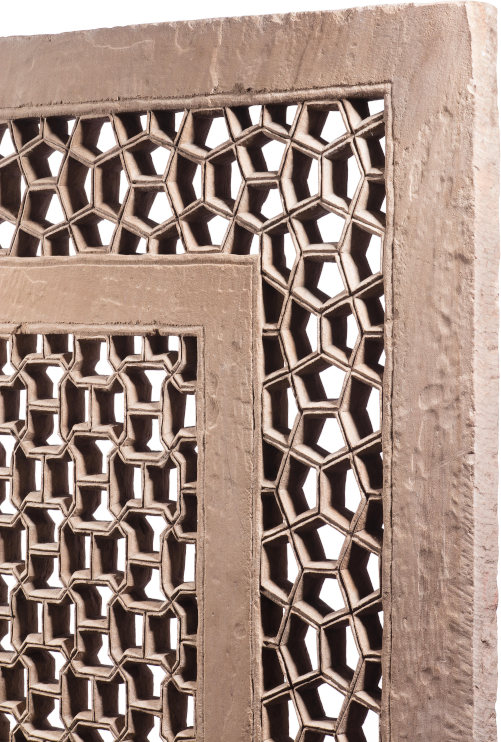
Detail of 17th-century Mughal jali. Height: 158cm, Width: 93cm, Depth: 3.3cm (5 ft 2” × 3 ft × 1¼”). © Simon Ray, London

Ramzy Omar. © Tarek Fikry
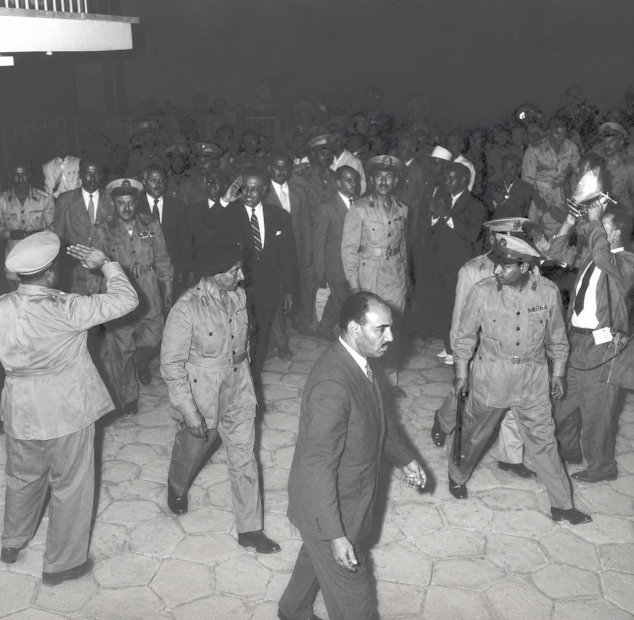
President Nasser (centre left) inaugurating the Galaa Club in Heliopolis during the July 23rd Revolution celebrations, 1957. The paving is only just discernible. © Bibliotheca Alexandria
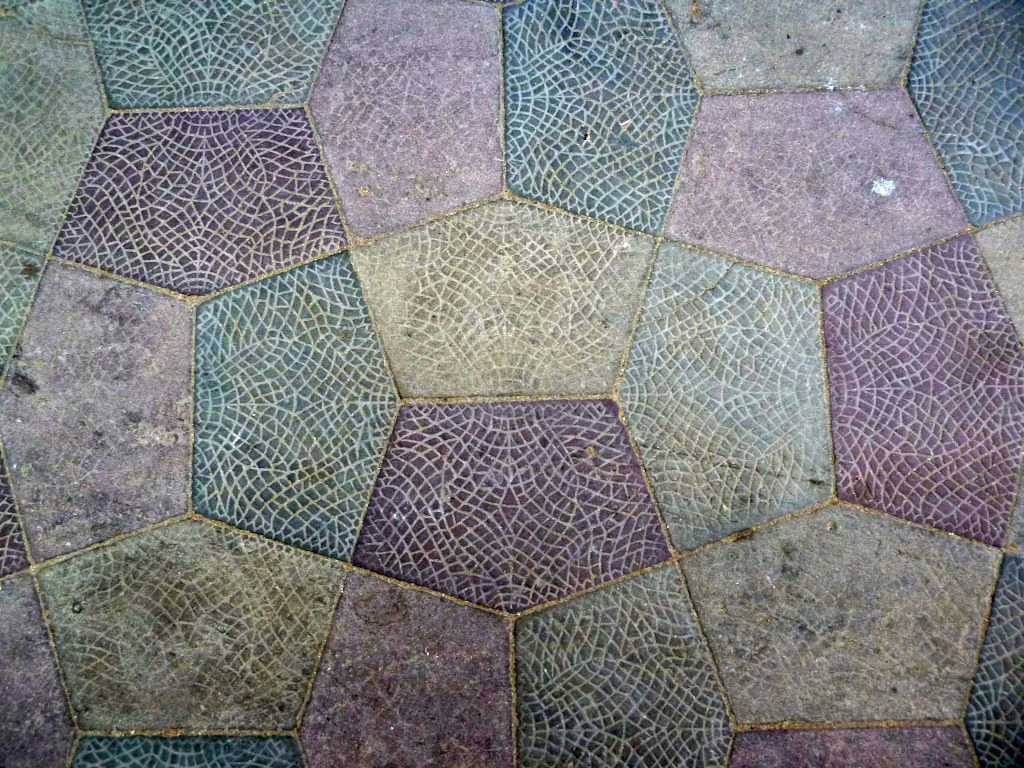
A prototype from 1957 at the home of Michel Hébert in Garden City, Cairo. © Michel Hébert
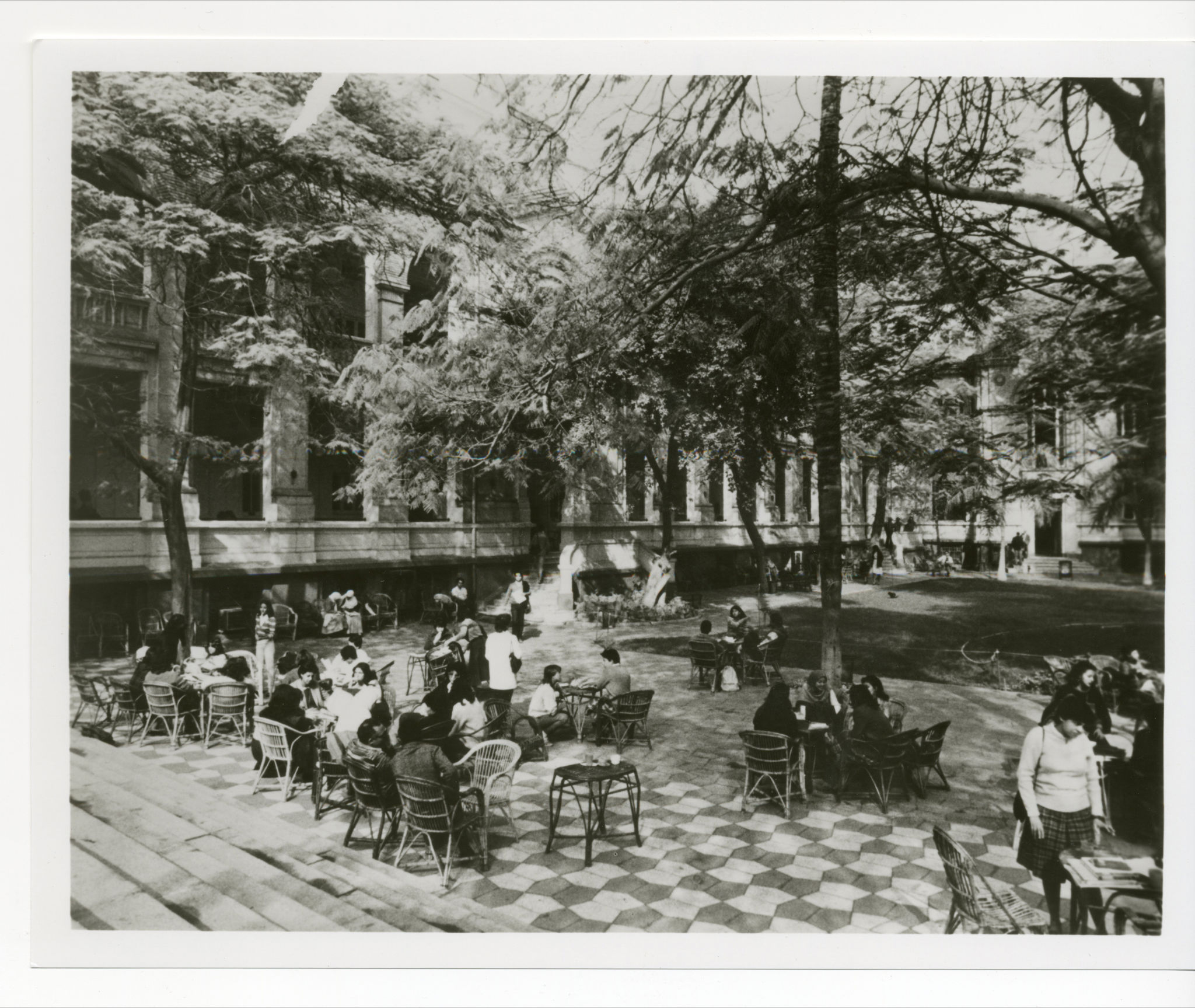
Looking out onto the Greek Campus, 1970s. © RBSCL, The American University in Cairo
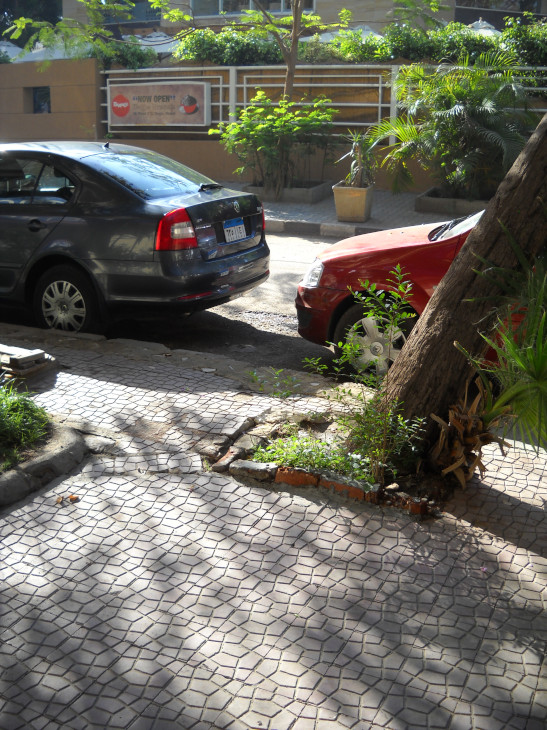
Plain tiles (mono-coloured) in the square format in Maadi, Cairo. © Gregg De Young
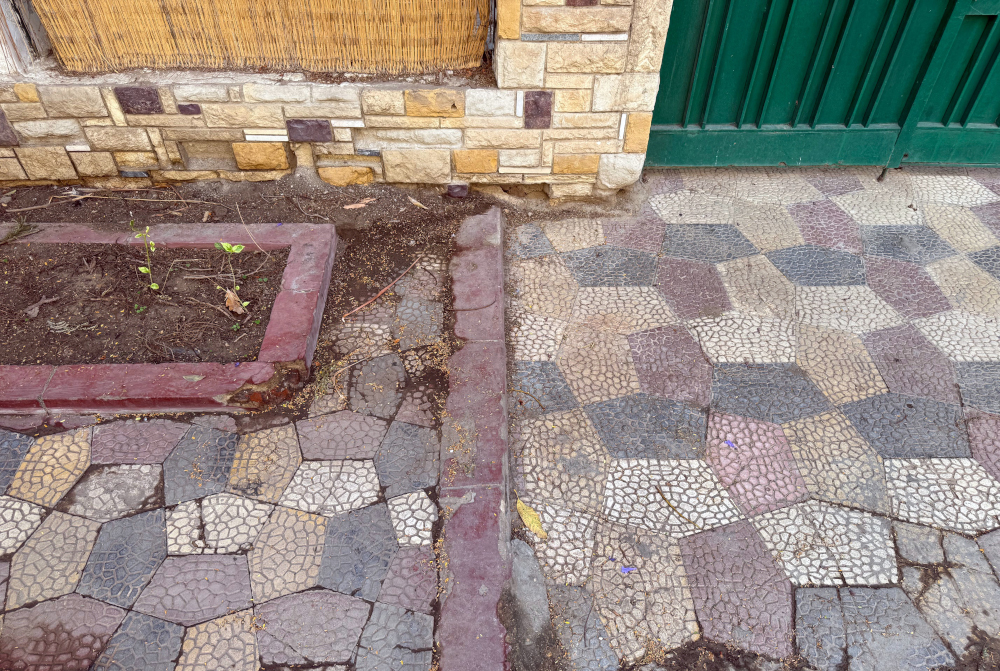
A structured four-colour arrangement of single pentagons in Maadi, Cairo. The picture also shows small and large tiles side by side. © Robert Fathauer
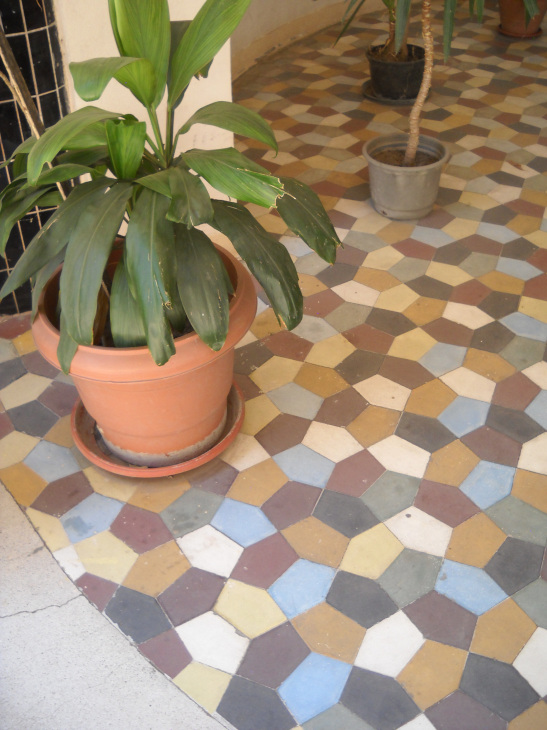
Entrance to the Women and Memory Forum in Mohandiseen, Cairo. © Gregg De Young
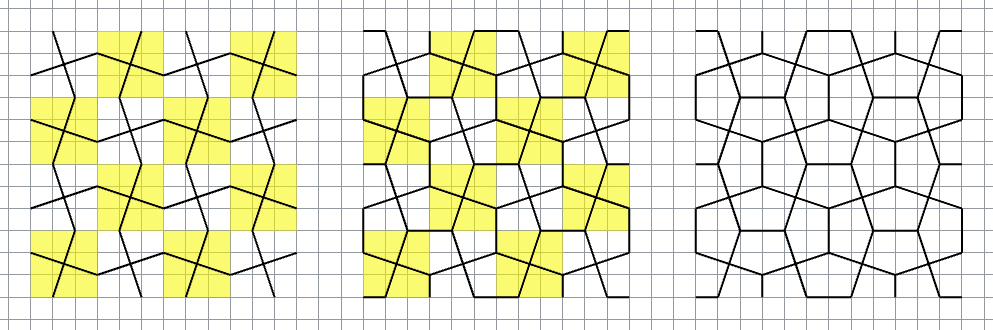
Geometric construction in three stages. © David Bailey
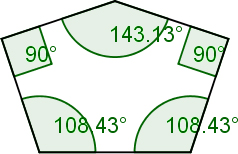
The angles of the pentagon. © David Bailey
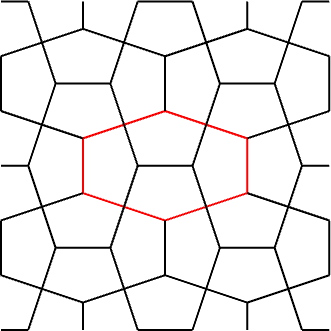
Parhexagon outlined. © David Bailey
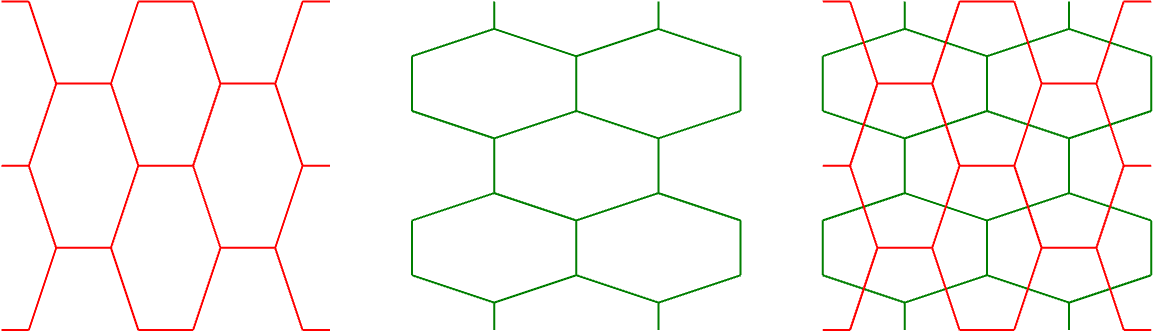
Overlapping parhexagons at right angles to form the Cairo tiling. © David Bailey
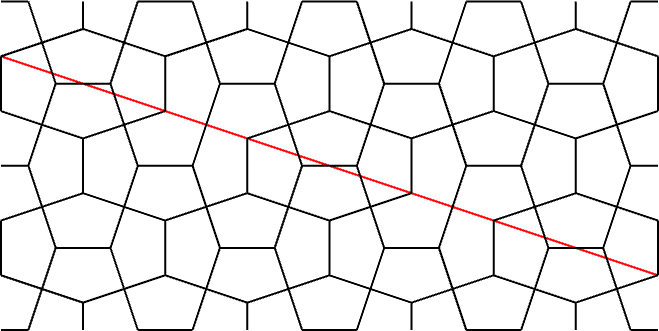
A line of collinearity overlaid on the recreation of the in-situ paving. © David Bailey
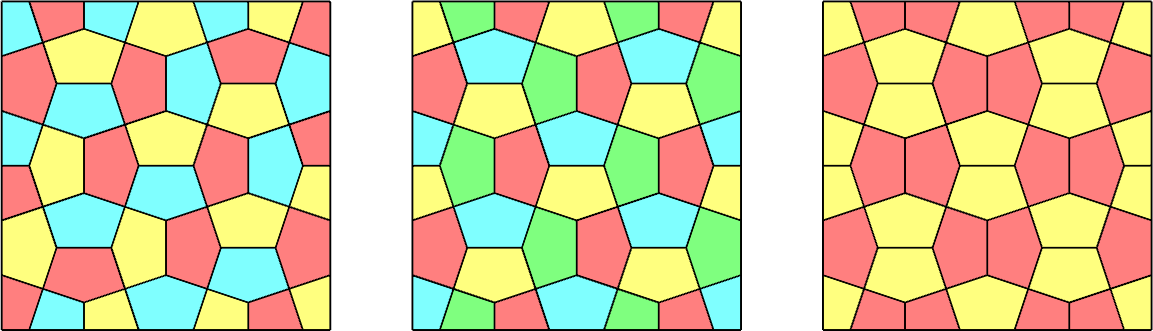
Three- and four-colour map colourings (left and centre), and two-colour non-map colouring (right). © David Bailey
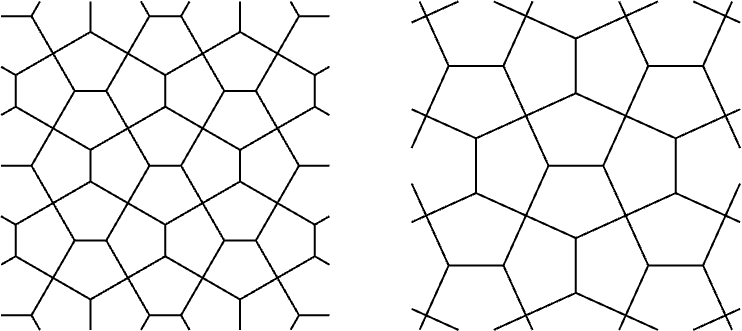
Equilateral and dual types of 3.3.4.3.4 tiling. © David Bailey
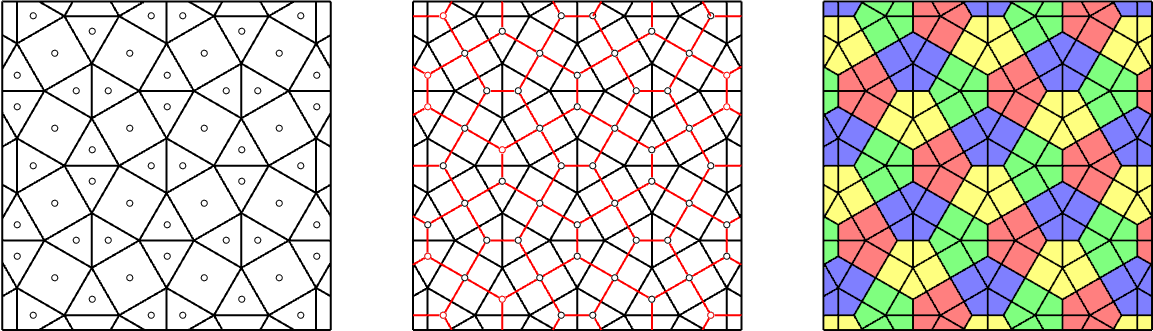
The 3.3.4.3.4 tiling of squares and equilateral triangles, with centres marked (left); the centres joined to form the dual, shown in red (centre); and the resulting Cairo‑like pentagons (right). © David Bailey
.png)